Welcome to the Winter 2026 edition of Migrant Worker Research Quarterly where we provide updates on our research and policy work and spotlight a curated collection of timely reports and studies on migration and labour.
Reflections on the past year
The past year has seen the Research and Policy team continue to build the evidence base for migrant worker justice. We published two new research reports, one arising from our partnership with ISCRR about home-based care workers, and another on the everyday experiences of working holiday makers, written with our colleague Lea Knopf.
Alongside these, we released two policy briefs about immigration status discrimination and the experiences of workers who obtained the Workplace Justice Visa, both of which have attracted significant attention from our stakeholders.
On the advocacy front, we made six submissions to state and federal inquires, helping to inform discussions on a wide range of issues affecting migrant workers, including disability-based exclusions, place-based support for international students, and the future of the skilled migration program.
We also reached new audiences, hosting UK-based scholar Panos Theodoropoulos, and running webinars spotlighting our work alongside PhD scholars from across Australia and colleagues at Monash University.
Next up: another joint report with ISCRR, deeper work with international students, and wider knowledge transfer. Stay tuned!
Would you like to have your research featured in our Research Quarterly? Are you interested in collaborating, volunteering with us, or presenting at one of our webinars? Get in touch with Batool Moussa at [email protected]
Global lessons, shared struggles at the Labour Transfer School 2026 |
 |
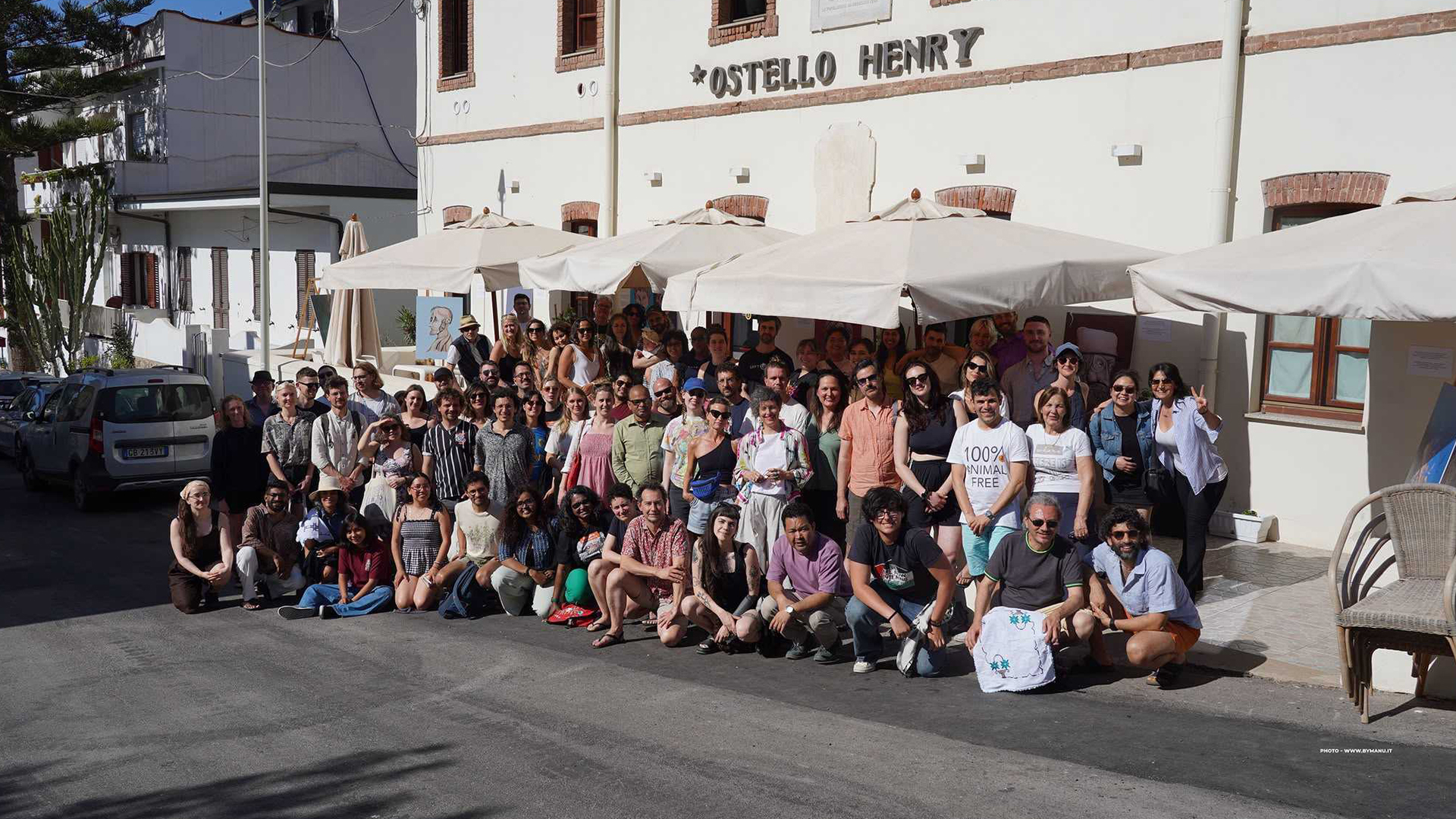
In June, the Research and Policy team joined scholars, trade unionists, journalists, and activists from around the world at the 5th Labour Transfer School in Buggerru, Sardinia.
Nestled on the southwestern coast of Sardinia, Buggerru is a seaside town steeped in radical union history. In 1904, soldiers opened fire on miners striking against brutal conditions, killing three and wounding eleven others. The massacre sparked Italy’s first ever national general strike – galvanising labour unity and mobilisation in the country for decades to come.

More than a century on, the town’s spirit of resistance lives on through the School, which hosts the exchange of struggles that are now global in both scale and urgency. Together, we explored issues related to migrant labour, plantation violence, social reproduction, and workers organising across different settings, including platform workers in Germany, workers in Meta’s content moderation centres in Kenya, and dockworkers in the fight for the liberation of Palestine.
What struck us most was how familiar every story and struggle felt, despite vastly different national and industrial contexts. Insecure migration status, subcontracting, weak enforcement, racialised labour markets, and the difficulty of sustaining organising over time were recurring, ever-present themes.
Because we shared the same struggles, connections formed quickly. We swapped papers, campaign materials, books, organising strategies, and examples of hard-won victories from different parts of the world. One such conversation introduced us to the work of comrades who have spent years on the frontlines of climate justice, experiences which they have pulled into a pressing treatise outlining an actionable theory of change. Another was the Movement Research Unit, a UK-based, volunteer-run initiative that offers free research support for disputes, strikes, and pressure campaigns.
 |
|
Throughout the week, the famous words of Antonio Gramsci, who spent his childhood in Sardinia, loomed large: "The crisis consists precisely in the fact that the old is dying and the new cannot be born; in this interregnum a great variety of morbid symptoms appear.” (1930, Selections from Prison Notebooks, 1972). We left Buggerru with a renewed sense of hope, that a new and better world, in spite of its struggles, could eventually be reborn. For all of us at the Migrant Workers Centre, the struggle for migrant worker justice continues. |
 |
Upcoming events |
|
Comcare national Conference 2026 14 – 16 September 2026 | National Convention Centre, Canberra The 2026 Comcare Conference will be held in Canberra from on 14 – 16 September, bringing together more than 900 delegates from across the work health and safety sector. This year's theme takes a people-first approach to workplace health and safety, exploring how wellbeing, inclusion and empowerment create the foundation for safe and thriving workplaces. Speakers include our very own Research and Policy Officer, Batool Moussa, who will be presenting at a session about migrant workers with colleagues from ISCRR. |
|
Federation of Ethnic Communities’ Councils (FECCA) Conference 2026 15-16th Oct 2026 | Parliament and Old Parliament House in Canberra The FECCA Conference returns on 15–16 October in Canberra this year. Under the theme “Navigating Change, Shaping Australia: Many Stories, One Future,” the conference invites community leaders, organisations, researchers, policymakers, public servants and changemakers to explore how multiculturalism, First Nations solidarity, connection and belonging can shape a more inclusive Australia. |
|
Anti-Racism Research and Practice Conference 12th Nov 2026 | University of Melbourne, Parkville The Anti-Racism Research and Practice Conference will be held on 12 November at the University of Melbourne’s Parkville campus. Convened by the University of Melbourne Anti-Racism Hallmark Research Initiative, Western Sydney University Challenging Racism Project and Melbourne Social Equity Institute, this conference will bring together researchers, practitioners and policymakers working on anti-racism. The event will provide a space to share research and practice, build networks and explore future collaboration. |
Call for interview participants
International students in Victoria
Monash University researchers are inviting international students in Victoria to take part in an online survey about workplace health and safety knowledge, work-related health, wellbeing, illness and injury experiences. The survey is open to international students currently studying, or who completed studies in or after 2023, at a university, college or TAFE in Victoria. You do not need to have worked while studying to participate. Participants can enter a draw to win one of five $100 gift cards. Your responses will help improve future support services and policy.
Click here to complete the survey
Invisible Labour, Visible Ratings: Care Work in the Age of Digital Platforms
Researchers are inviting independent support workers who use care platforms such as Mable and Hireup to take part in a survey and/or interview about their work experiences. The project explores working conditions, income stability, wellbeing, and the policy support needed for this growing workforce. The anonymous, ethics-approved survey takes around 20 minutes and includes an optional gift card draw.
Click here to complete the survey
Reports, articles and commentary
 |
ISCRR and the Migrant Workers Centre (June 2026)Exploring Unheard Voices: Migrant Workers in Home-based CareOur latest report, developed in partnership with ISCRR, examines the occupational health and safety experiences of migrant workers in home-based care, one of Australia’s fastest growing and highest-risk sectors. Drawing on interviews with 28 workers, conducted in-language by our Bicultural Ambassadors, the study found high exposure to physical and psychosocial hazards, including manual handling injuries, abuse, and racism. Many risks were shaped by employer practices, such as poor training, exploitation, and weak reporting systems, and were compounded by visa precarity and other systems-level issues. The report calls for coordinated action across employers, governments, regulators, and community organisations to deliver clearer, in-language rights information, support stronger enforcement and oversight, and address structural drivers such as visa precarity, insecure and casualised employment, and funding models that shift risk onto workers. |
 |
Migrant Justice Institute (May 2026)Off The Books: Inside Australia’s Hidden System of Migrant Worker ExploitationThe Migrant Justice Institute has released another landmark report on migrant worker exploitation. Based on a 2024 survey of almost 10,000 temporary visa holders, the report found that two-thirds were paid below the legal minimum, with international students underpaid an estimated $61 million every week. The report makes it clear that underpayment is not an isolated problem or the result of a few bad employers. It is systemic. The findings expose how exploitative employers use sham contracting, insecure casual work, fraudulent payslips and cash payments to avoid scrutiny. This is why we need stronger enforcement, expanded Workplace Justice visa protections, and serious reform of international student work limits. Read The Conversation op-ed here. |

This article takes a sociological perspective to examine how the Pacific Australia Labour Mobility (PALM) scheme has shifted Australia further towards a long-term guestworker model. PALM workers can work in Australia for up to four years, but remain subject to significant restrictions: they cannot freely change employers or access permanent residency. Drawing on interviews with workers, families and government stakeholders, the article shows how these conditions create prolonged family separation, emotional strain and unequal restrictions on workers’ intimate and family lives.
In recent years, a growing body of research and advocacy, including from the NSW Anti-slavery Commissioner, the Australia Institute, the ACTU, the UN Special Rapporteur on contemporary forms of slavery and others has warned about the harms created by employer-tied visa arrangements. PALM workers must be given genuine freedom to change employers. The time for reform is now.

Another important research article on Pacific labour mobility examines how temporary labour migration exposes women across the Asia Pacific to gendered harm, precarity, and restricted mobility. Drawing on 43 studies published between 2014 and 2024, the scoping review finds that women migrant workers experience a broad spectrum of gender-based violence, with serious impacts on health, wellbeing, and freedom of movement. The article highlights how migration, health and social systems can create conditions of “indentured mobility”, where precarious work and visa conditions make it harder for women to leave unsafe situations. It calls for stronger transnational mechanisms to prevent violence and support migrant women’s safety.


