
Welcome to the Autumn 2026 edition of Migrant Worker Research Quarterly, where we spotlight a curated collection of timely reports and studies on migration and labour.
In this edition, we also reflect on our recent online webinar featuring MWC’s Batool Moussa and our Bicultural Work Rights Ambassador, Habiba, whose work has been invaluable to our partnership with the Institute for Safety, Compensation and Recovery Research (ISCRR).
We are also excited to announce our upcoming PhD Showcase Webinar, featuring three current PhD students whose research centres on migrant experiences and issues. They will share their ongoing research and fresh insights from the field.
Recap
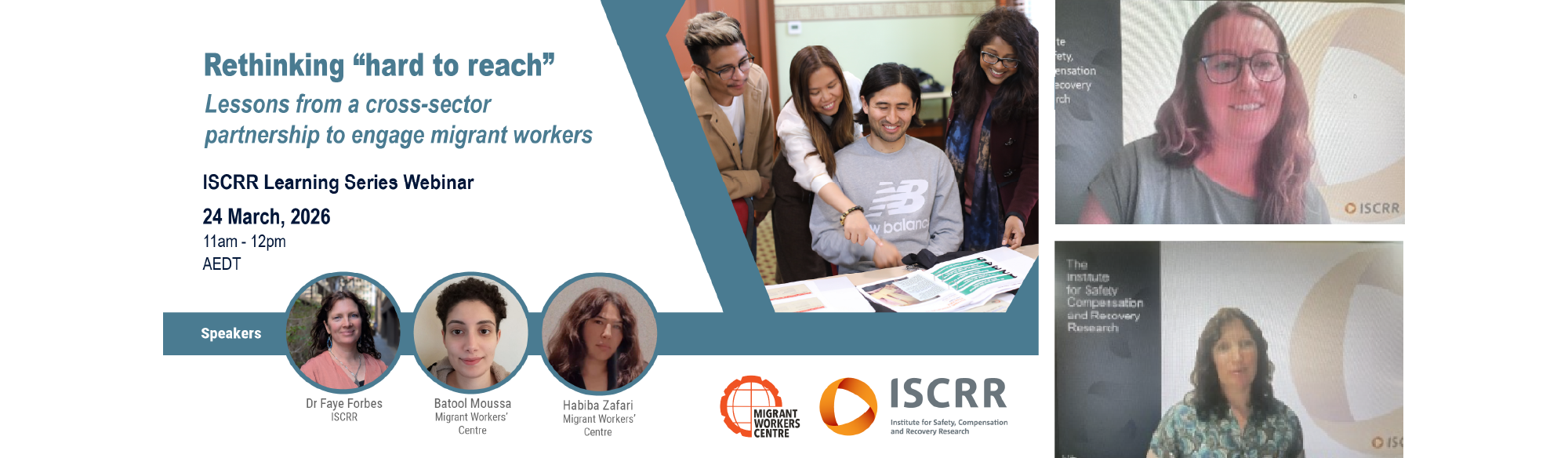
Rethinking 'hard to reach' - lessons from cross-sector partnership to engage migrant workers
Our recent online webinar featured MWC’s Research and Policy Officer, Batool and Bicultural Work Rights Ambassador, Habiba. The session reflected on our joint work on the care sector, exploring how the participating Ambassadors contributed to the study, helped build trust and connections with ethnic communities and demonstrated the value of participatory methods. It also highlighted how strong briefing processes and a multi-layered study design supported deeper engagement and richer findings.
Upcoming events

PhD Showcase: New Research on Migrant Workers’ Experiences
20 May 2026 | Online | 1-2pm AEST
Join us for our upcoming PhD Showcase, featuring three emerging researchers whose work explores migration, gender, labour and the lived realities of temporary and international migrant workers in Australia.
 |
Hear from Thilini Bandara, whose PhD examines the gig work experiences of international students in Australia. Her research explores how students navigate the complex life-work-study nexus. |
 |
Gemma Tarpey-Brown will share insights from her research on women’s experiences of temporary labour migration between Australia, Pacific Island countries and Timor-Leste. Her work focuses on health, wellbeing and family relationships. |
 |
We’ll also hear from Lindy Kanan, whose research explores gender, migration, development and women’s safety. Her work focuses on temporary migration from Timor-Leste and the Pacific to Australia. |
This webinar is a great opportunity to hear from the next generation of scholars working at the intersection of migration, labour, gender and social justice.

Concert for Timor-Leste – Fundraiser Event
3 May 2026 | MUA Auditorium, 45-54 Ireland Street, West Melbourne | 3:30-7:30pm
Join APHEDA and the Maritime Union of Australia (MUA) for a powerful afternoon of live music, community and solidarity in support of Timor-Leste. Tickets include food by the Timorese community and drinks by the MUA.
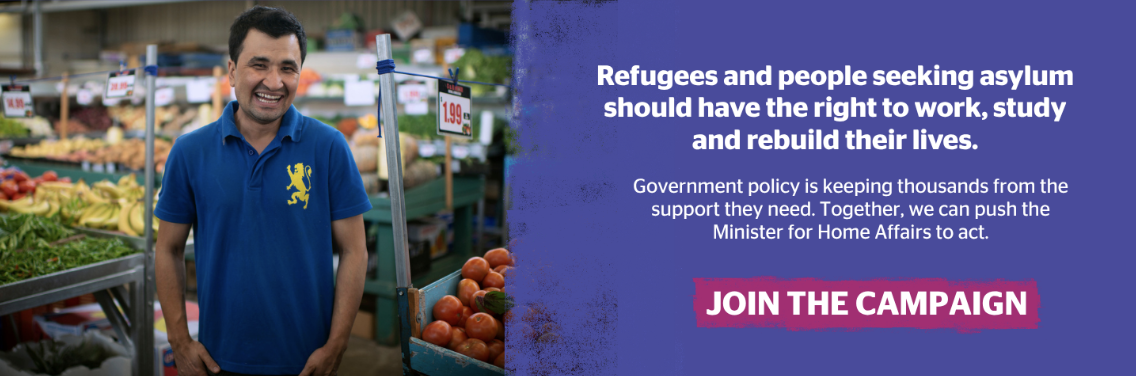
ASRC - Work Rights Campaign
7 May 2026 | Victorian Trades Hall | from 6pm
The ASRC will be hosting a campaign launch at the Victorian Trades Hall on Thursday 7 May, from 6pm.
 |
Everyone deserves a fair chance to rebuild their life. Right now, people seeking asylum are denied the right to work and study while they wait for protection decisions. This leaves people unable to support themselves or contribute their skills. With the stroke of a pen, Minister Burke can restore this fundamental right, enabling people to participate, contribute and strengthen our communities. |
ASRC are seeking union organisers and representatives to join the campaign and help build collective pressure for change. This could take many forms, from mobilising your members and networks to speaking publicly about the workplace impacts of denying work rights and contributing your voice at events attended by supporters and key decision-makers. Union leadership carries real weight in these spaces, particularly in showing how inclusive employment strengthens both workers and industries.
Please send an email to [email protected] if you’d like to be involved or have any questions.
Research participation requests
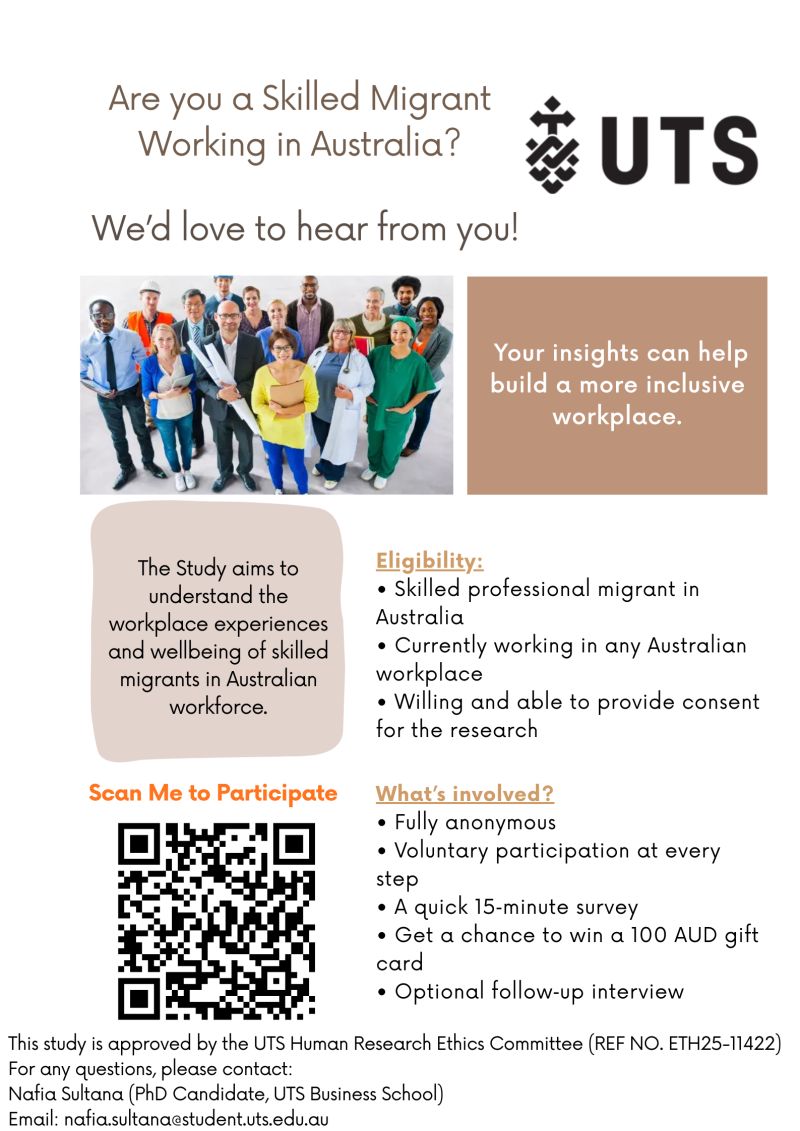 |
Did you come to Australia or obtain residency based on your skills? UTS PhD student Nafia Sultana is conducting a survey on the well-being of skilled migrants in Australia. The survey is anonymous and takes around 15 minutes to complete. |
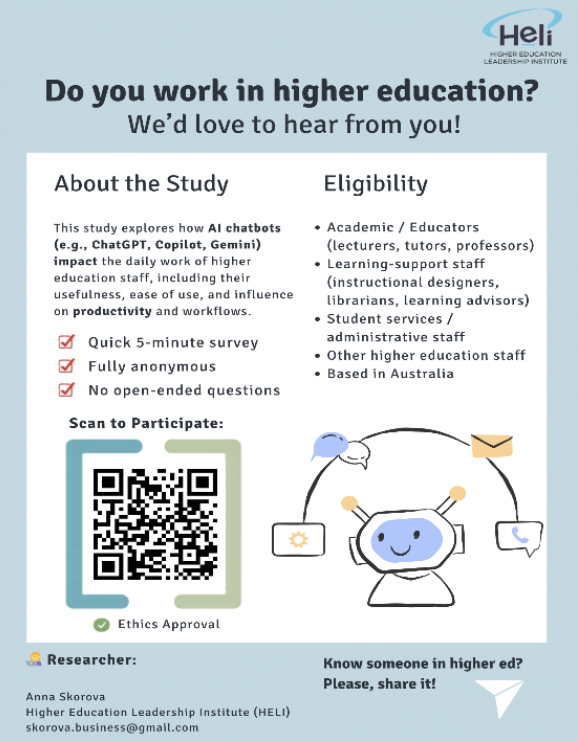 |
Do you work in higher education? Graduate student Anna Skorova is conducting a survey about experiences in the higher education sector. The survey takes around five minutes to complete. |
Reports and commentary
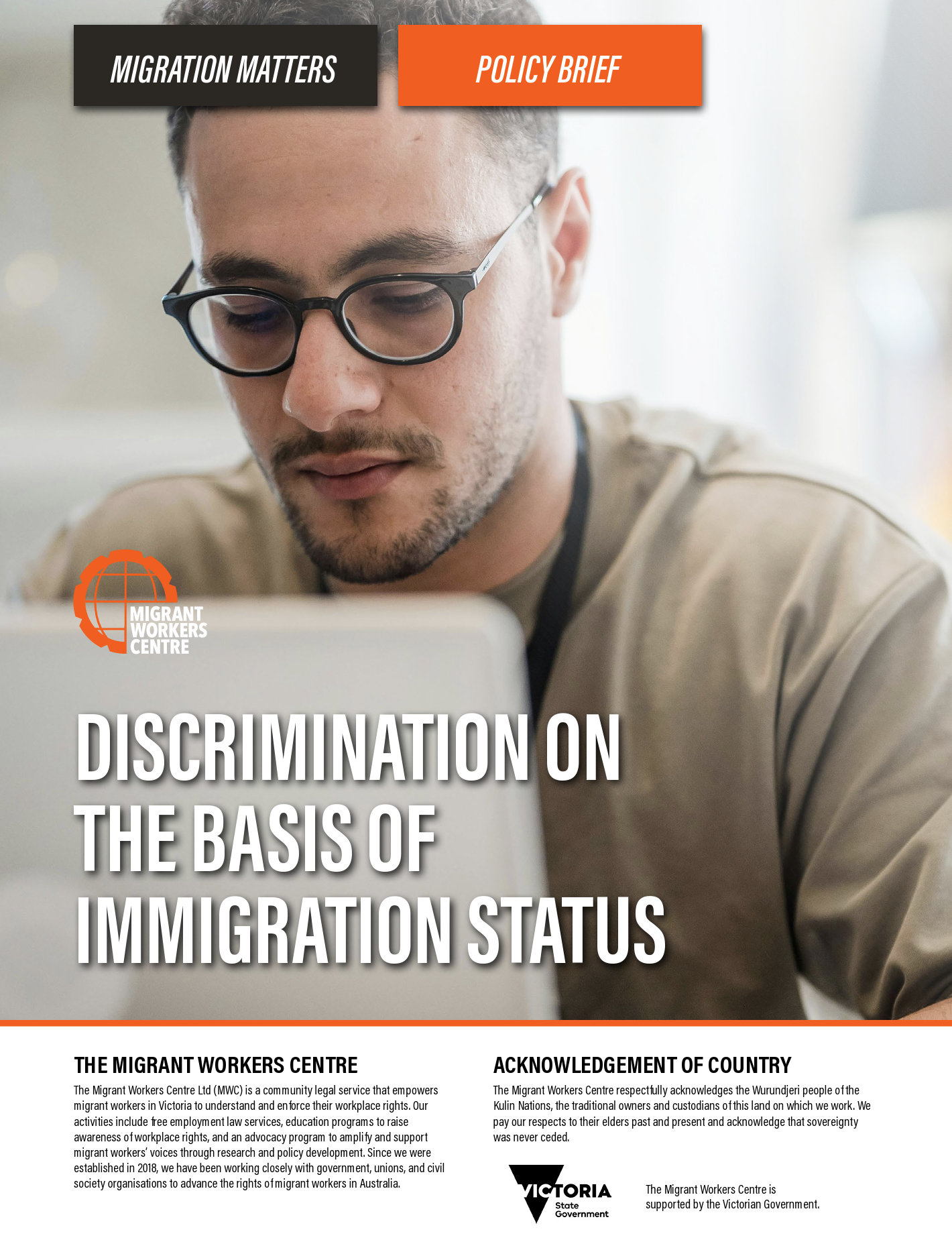 |
Migrant Workers Centre, Discrimination on the basis of immigration status (Policy brief, April 2026). |
In MWC’s latest policy brief, we argue that immigration status, while not formally defined in law, has a significant effect on a person’s visa conditions, work rights and access to services in Australia.
We also emphasise that immigration status operates as a social category, shaping how non-citizens are treated in the labour market and in public life. Temporary visa holders frequently experience discrimination, even where they have lawful work rights because employers often wrongly treat permanent residency as a proxy for employability, stability and long-term value.
In practice, this exclusion pushes many migrant workers into insecure, low-paid and informal work, where they are more exposed to exploitation. We highlight that these harms are particularly severe for people who remain on temporary visas for many years, or even indefinitely, resulting in prolonged precarity, underemployment and deskilling.
Despite these clear harms, immigration status is still not broadly recognised as a protected attribute under Australian anti-discrimination law, with the ACT remaining the only exception.
Recommendations
1. Add immigration status as a standalone protected attribute under state and territory anti-discrimination law, with appropriate exceptions.
2. Amend sections 772(1)(f) and 351 of the Fair Work Act 2009 (Cth) to include the additional ground of ‘immigration status’.
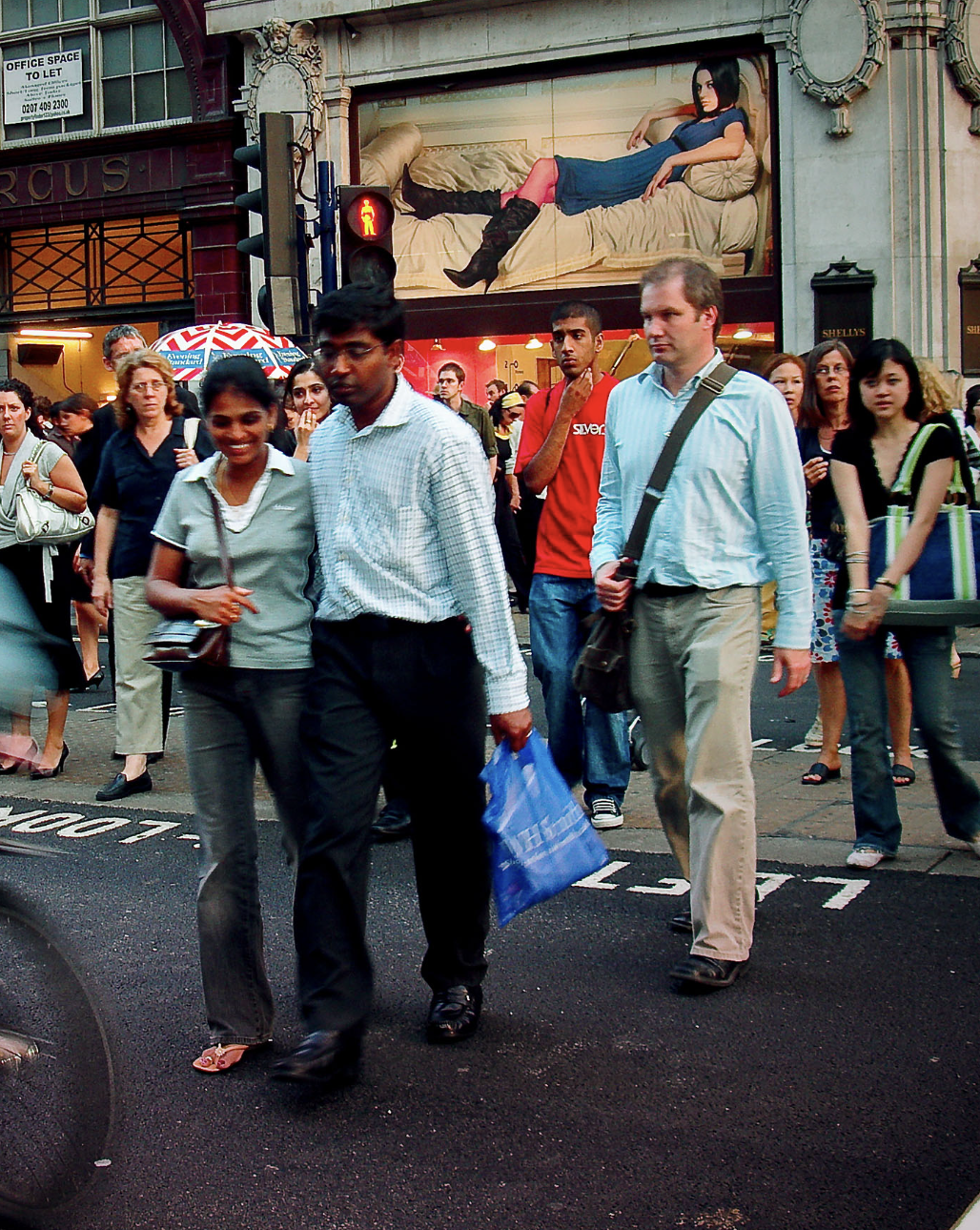 |
Peter Mares, ‘Rough justice’ Inside Story (online, 19 February 2026). |
The two-step migration model has long been embedded in Australia’s temporary migration system and the Migrant Workers Centre has documented the harms it produces. Successive policy fixes have channelled international students into insecure and costly pathways that often involve cash-in-hand work, poor-quality training and exploitative “ready for work” programs. Peter Mares’s article extends this critique by showing how temporary migrants are treated as economically necessary but denied the security, rights and recognition of full membership. Together, these arguments suggest that the exploitation of international students is not incidental, but structurally produced by a system dependent on temporary, right-limited labour.
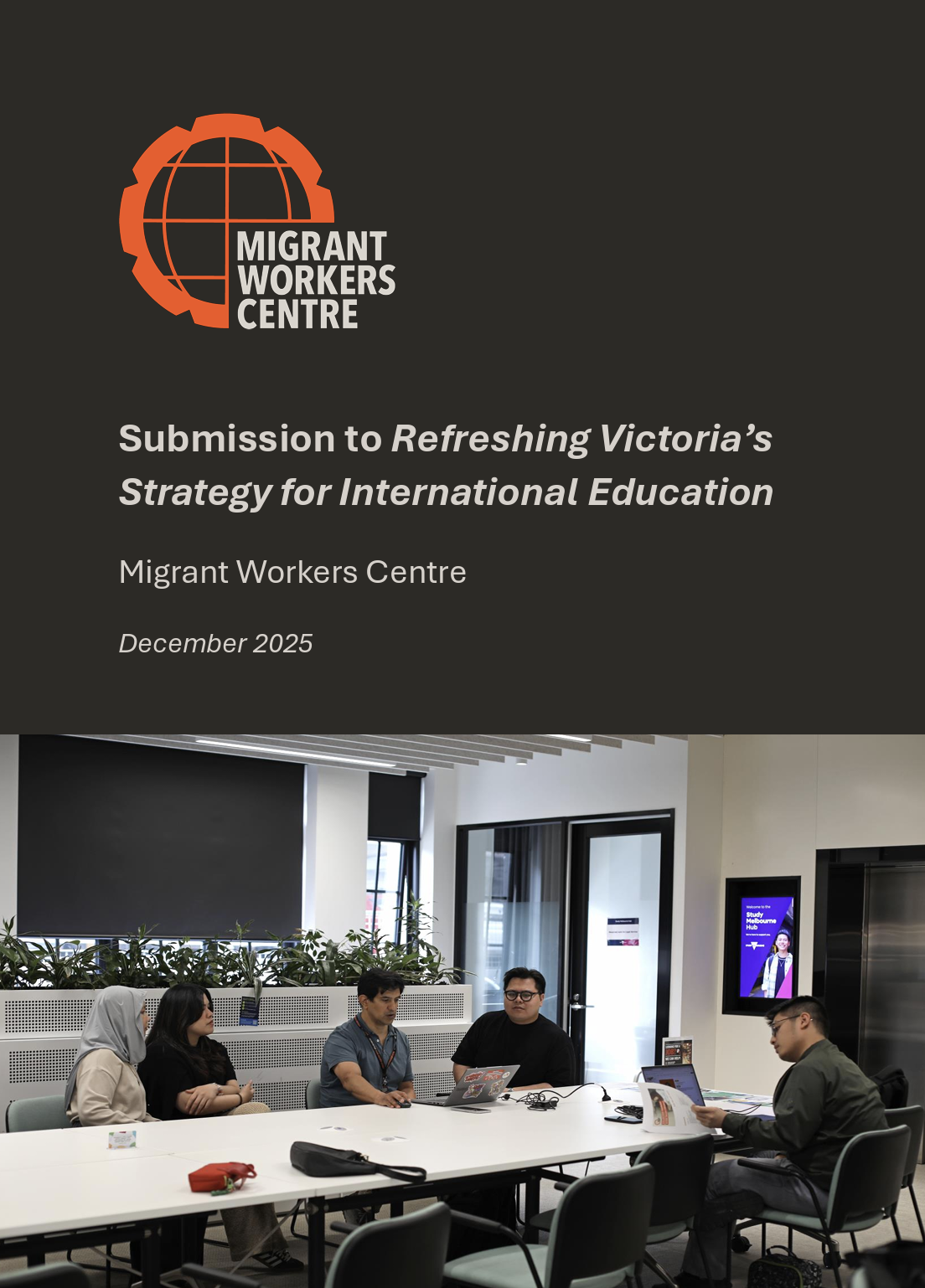 |
Migrant Workers Centre Refreshing Victoria’s Strategy for International Education (Submission, 2025) |
Consistent with the article above, the Migrant Workers Centre’s 2025 submission to Refreshing Victoria’s Strategy for International Education, drawing on evidence from services delivered through the Study Melbourne Hub, calls for sustained investment in integrated, place-based and culturally appropriate support services that can respond early and effectively to student needs. It argues that the refreshed Strategy should recognise fair, safe and decent work as a core objective, strengthen support and social protections for students and better align with broader efforts to prevent migrant worker exploitation.
 |
Fiona Macdonald, Lisa Heap and Charlie Joyce. Addressing the health workforce crisis in the Pacific (Centre for Future Work, The Australia Institute, 2025) |
In response to high labour demand in the care sector, the Australian government has expanded the PALM scheme to include workers in aged care. This report raises longstanding concerns from health unions and other organisations in Pacific Island countries that these pathways are depleting already overstretched health systems by drawing skilled care workers away from their home countries.This reveals a broader structural problem: temporary migration schemes are often promoted as development opportunities, while labour shortages, care burdens and social costs are shifted onto sending communities. The report calls for stronger regional social dialogue and for Pacific unions and workers to be meaningfully included in shaping labour migration policy, with decent work and labour rights placed at the centre. Related work along MWC with ISCRR, including a forthcoming report, extends these concerns to migrant aged care workers, highlighting Australia’s growing reliance on temporary migrant labour in care and the risks this creates for both workers and the systems they sustain.
 |
“If I stay like this, how can I benefit my family?”: Initial findings on disengagement from the Pacific Australia Labour Mobility scheme (Report, Griffith University, 2025) |
Another PALM-related study, “If I Stay Like This, How Can I Benefit My Family?”, argues that disengagement from the scheme is not simply a matter of individual workers “walking away” but a symptom of deeper structural failure. Based on interviews with former PALM workers and support stakeholders in the Riverina Region of NSW, this study finds that workers often leave due to inadequate hours, low income, excessive deductions, wage theft and unfair treatment. Once outside the scheme, many face visa uncertainty, poor access to services and predatory migration agents, while continuing to contribute to regional economies. The report calls for urgent reform, including regularisation pathways, genuine worker mobility, reduced deductions, subsidised travel and Medicare access.
 |
Marie Segrave and Stefani Vasil, The Impact of Temporary Migration Status on Access to Refuge in Victoria: Barriers to Safety and Support (Report, The University of Melbourne, 2026). |
Over the years, we have often heard the view that migrants are already adequately supported and therefore do not require additional resources. This reflects a misunderstanding of Australia’s visa and welfare framework. Refugees and temporary migrant workers are governed through very different policy and visa settings, with very different entitlements and access to support. Temporary visa holders are often excluded from the protections and services that people assume are universally available. This gap became especially visible during the COVID-19 pandemic, when many temporary visa holders were stranded in Australia without meaningful income support, secure housing or access to essential services. The Impact of Temporary Migration Status on Access to Refuge in Victoria: Barriers to Safety and Support research reinforces this point. Focusing on Victoria, the study finds that temporary visa holders face limited access to refuge due to visa conditions and documents the financial and operational pressures refuges face in trying to support them. With limited access to income support, Medicare and services such as the NDIS, many women on temporary visas require support beyond what refuges are funded to provide. While Victorian brokerage funding helps, it does not consistently meet these costs. The report argues that the problem is structural and requires migration-system reform, not piecemeal responses.
Callout for research materials
Are you interested in having your research featured in a future edition of our Quarterly? Or would you like to collaborate or volunteer with us?
Get in touch with Sherry Huang at [email protected]


